Claude Code Pricing: What It Actually Costs in 2026
Claude Code is not free. Here is what Pro, Max, Team, and Enterprise plans really cost per month, plus when per-token API billing is the cheaper path.
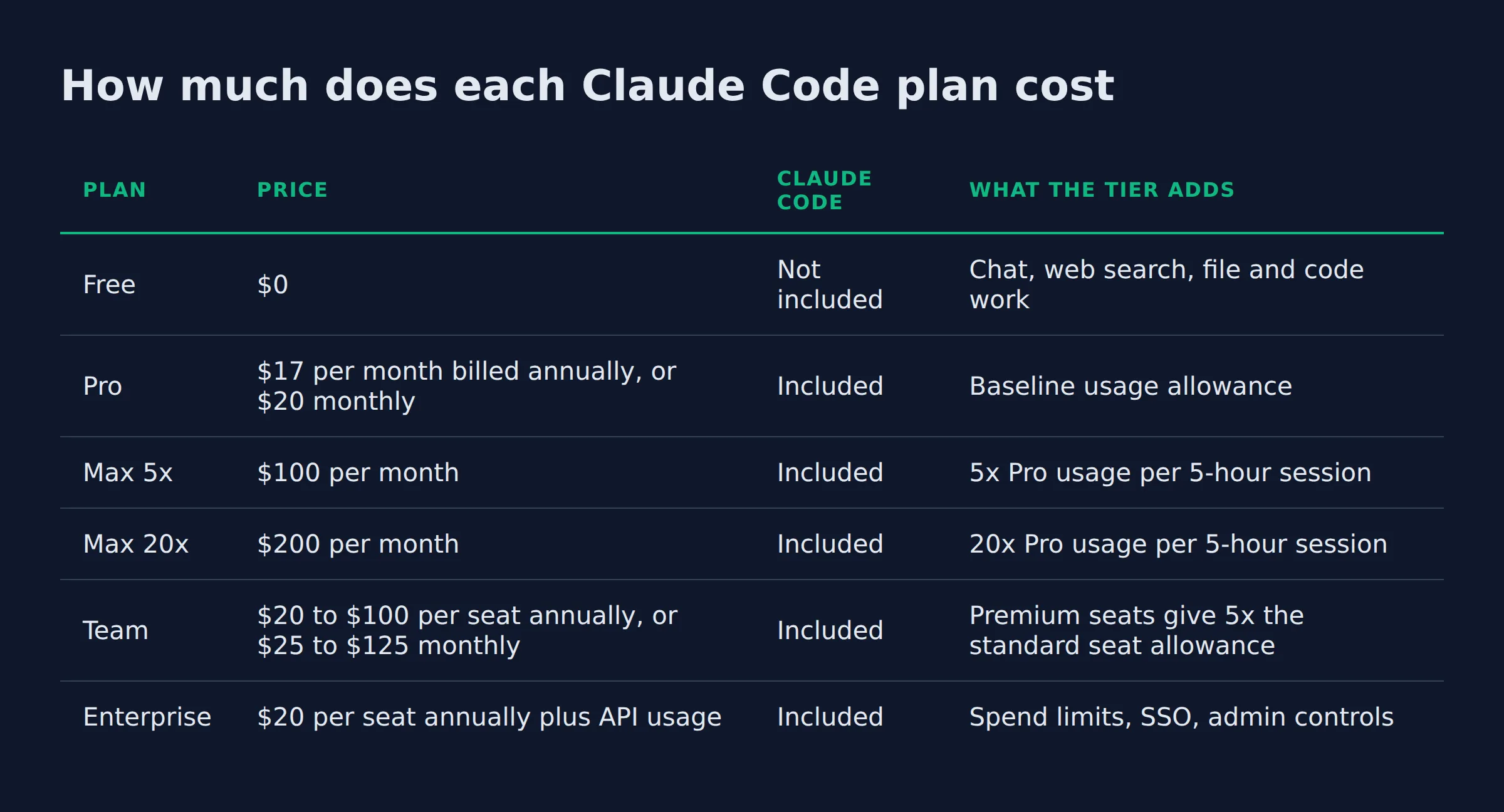
Claude Code has no price of its own. It bills through whichever door you opened, and the two doors charge very different amounts.
So how much does Claude Code cost? Claude Code needs a paid Claude plan. Pro is $17 per month billed annually or $20 monthly, and Max is $100 or $200. Team seats start at $20, and Enterprise is $20 per seat plus usage. Heavy users can pay per token through the API instead. The full plan breakdown sits in Claude subscription pricing.
Most pricing guides for this tool quote list prices from a desk. I write from the operator side. I run a local SEO agency, my outreach system pushes about 200 form submissions a day, and the agents behind this blog land on a token bill every month.
TL;DR
- Claude Code is included in every paid Claude plan. The free plan leaves it out.
- List price runs from $17 a month on Pro to $200 on Max 20x. Team seats cost $20 to $125. Enterprise adds usage at API rates.
- API billing starts at $2 per million input tokens and $10 per million output tokens on Sonnet 5.
- The plan price is fixed. The token bill follows your context, and that is where the surprise lives.
Is Claude Code free?
No. Claude Code sits behind a paid account, and the free claude.ai plan does not include it. The cheapest real entry is Pro at $17 per month billed annually, or $20 month to month.
Anthropic’s setup guide says it in one line: Claude Code needs a Pro, Max, Team, Enterprise, or Console account. The plan comparison table shows the same thing in a row, with Claude Code marked No on Free and Yes on every paid tier.
Free still gets you the chat app, web search, and file creation. That covers testing the model. Running a terminal agent needs the paid seat.
There is no free tier for Claude Code, so budget a paid plan from day one.
How much does each Claude Code plan cost?
Claude Code pricing starts at $17 a month on Pro and reaches $200 on Max 20x. Team seats run $20 to $125 each, and Enterprise adds $20 per seat plus usage billed at API rates.
Every tier sells the same tool. What changes is how much work fits before a limit stops you.
| Plan | Price | Claude Code | What the tier adds |
|---|---|---|---|
| Free | $0 | Not included | Chat, web search, file and code work |
| Pro | $17 per month billed annually, or $20 monthly | Included | Baseline usage allowance |
| Max 5x | $100 per month | Included | 5x Pro usage per 5-hour session |
| Max 20x | $200 per month | Included | 20x Pro usage per 5-hour session |
| Team | $20 to $100 per seat annually, or $25 to $125 monthly | Included | Premium seats give 5x the standard seat allowance |
| Enterprise | $20 per seat annually plus API usage | Included | Spend limits, SSO, admin controls |
Those figures come straight from the plan comparison table, and the Claude Code product page repeats the Pro and Max numbers in its tier block.
Pro rewards a yearly commitment. You pay $200 up front instead of $240 across 12 monthly charges, so annual billing saves $40. The Max plans bill monthly only.
A 2-person shop makes the shape of the decision obvious. Two Team standard seats cost $480 a year at the annual rate. The same 2 people on Max 5x cost $2,400 a year.
Buy the ceiling you actually hit. The tier below it costs more in interruptions than it saves.
What charges sit outside the plan price?
A leftover API key, a web search call, and a code container each bill on their own line. Background work bills too, and none of it shows up on the plan page.
The expensive one is the leftover key. Anthropic’s authentication docs spell out the trap: a Claude subscription plus ANTHROPIC_API_KEY in your environment means Claude Code uses the key once you approve it.
Your sessions then bill per token instead of drawing on the plan you already paid for. Run unset ANTHROPIC_API_KEY to fall back to the subscription, then check /status to see which credential is live.
Idle time is not free either. Anthropic’s cost guidance puts background work at under $0.04 per session, which covers conversation summarization, status checks, and prompt suggestions. Small, but it never stops while a session sits open.
The feature-level charges live on Anthropic’s API rate card:
| Charge | Rate |
|---|---|
| Web search | $10 per 1,000 searches |
| Code execution container | $0.05 per hour |
| Fast mode on Opus 5.5 | $8 input and $40 output per MTok |
| Batch processing | 50% off standard rates |
| US-only inference | 1.1x on every token category |
That last row catches regulated teams. Pinning inference_geo to us adds a 1.1x multiplier to input, output, cache writes, and cache reads.
One more habit of the meter is worth knowing. On CloudZero’s breakdown, models from Claude 4.7 onward use a tokenizer that produces roughly 30% more tokens for the same text. CloudZero sells cost visibility, so treat that framing as third-party. The tokenizer point still holds for anyone on Claude 4.7 or newer.
The plan page shows a subscription. The meter also counts searches, containers, and idle sessions.
How does Claude Code API pricing work per token?
Claude Code on an API key bills per token at list rates. Sonnet 5 costs $2 per million input tokens and $10 output. Opus 5 costs $5 and $25, and Haiku 4.5 costs $1 and $5.
Those are billed per million tokens, usually written MTok. Three models cover almost every job.
| Model | Input | Output | Cache read |
|---|---|---|---|
| Sonnet 5 | $2 / MTok | $10 / MTok | $0.20 / MTok |
| Opus 5 | $5 / MTok | $25 / MTok | $0.50 / MTok |
| Haiku 4.5 | $1 / MTok | $5 / MTok | $0.10 / MTok |
Prompt caching is what keeps agent work affordable. The rate card prices a cache read on Sonnet 5 at $0.20 against a $2 input rate. A stable system prompt re-read every turn costs a tenth of fresh input. Batch processing halves the standard rate for jobs that can wait.
Long context stopped being a surcharge. On models from Claude 4.6 onward, a 900k-token request bills at the same per-token rate as a 9k-token request.
The same page works two real examples. A managed Opus 5 session comes to $0.625 for 50,000 input tokens and 15,000 output tokens. An hour of runtime adds $0.08. The other example runs 10,000 support tickets at Haiku 4.5 rates. At roughly 3,700 tokens each, it lands near $37.
Output tokens cost five times input tokens, so a chatty agent is the expensive kind.
What my own automation taught me about the meter
My outreach system pushes about 200 form submissions a day, and it has never sat on a subscription seat. Machine-driven work goes on an API key with a hard spend cap, because a plan meters people and a key meters jobs.
The metered line is the cheap one. Those 200 submissions work out to about 6,000 follow-up replies a month. Each reply reads roughly 2,000 input tokens and writes a few hundred back. At Sonnet 5 rates that lands near $24 of input and $18 of output. Call the month about $42, and prompt caching shaves the fixed part of it again.
The expensive line is the long session, and those run on a Max seat. The SEO team that wrote this page runs 5 agents with one job each: research, brief, draft, review, publish. Every stage is its own model call, so every stage carries its own context. The size of that context is what moved me up a tier.
The bill that made me look twice came from one stage. On the day a draft stage pulled in every source page it could reach, that stage ran for hours. It read more tokens than the rest of the run together. It also billed more than my follow-up month.
The fix cost nothing and took an afternoon. I cut what each stage loads. The brief stays narrow, and the sources arrive as one research-pack.md file instead of a live crawl. The same pipeline ships the same output on a fraction of the context.
Match the meter to the workload. Seats price a person, and keys price a job.
Why does Claude Code have usage limits, and when will you hit them?
Claude Code limits reset on a rolling 5-hour window, and paid plans add weekly caps on top. Your terminal sessions and your Claude chats draw from the same pool, so a heavy chat day shortens your coding day.
Anthropic’s pricing FAQs confirm the shared pool and the reset windows. The cost guidance lists what drains the pool fastest:
- A long session re-reads its history on every turn, at the cached rate but on every turn.
- A cache miss after a long break reprocesses the full context. The cache lives an hour on a subscription.
- A scheduled task fires on its interval while the session sits idle, sending the full context each time.
- Subagents and agent teammates send their own requests on top of the main conversation.
- Compaction reads the whole conversation it summarizes, so tidying a large context is itself large.
When a limit lands mid-task, you wait for the reset, move up a plan, or turn on usage credits. Usage credits bill the overflow at standard API rates, which is the mixed month nobody budgets for. Recent builds of Claude Code can also hold the task and continue it automatically after the reset.
For a sanity band, use Anthropic’s own deployment numbers. The cost guidance page puts the average at about $13 per developer per active day. Measured across a month, that runs $150 to $250 per developer, and 90% of users stay under $30 a day.
The horror stories come from the same page’s absence of a ceiling. CloudZero reports an overnight loop that ran up roughly $6,000 while nobody watched.
The same piece reports a month of Claude usage billed at about $500 million at a company that had set no usage limits on licenses. It also notes Uber’s per-engineer bills reaching $500 to $2,000 a month after a rollout to roughly 5,000 engineers.
Treat all three as third-party reporting rather than published rates.
The big bills come from work that kept running while nobody was watching.
Which plan should you pick, Pro, Max, Team, or Enterprise?
Start on Pro if you code in evenings and short bursts. Move to Max 5x once a limit interrupts you more than once a week. Move to Max 20x when agent sessions fill most of your day, and keep machine-driven work on the API.
| Your pattern | Where it fits | The tell you chose wrong |
|---|---|---|
| Evenings and short edits | Pro, $17 or $20 | You keep waiting for the window to reset |
| Daily sessions on real projects | Max 5x, $100 | The interruptions cost more than the upgrade |
| Agent loops and pipelines | API key with a hard cap | Nothing is capping the spend |
| A team needing admin control | Team, $20 to $125 per seat | Nobody can see spend per person |
Is a subscription or the API cheaper for your usage?
For a person working normal days, the subscription usually costs less, because the plan absorbs your busy week. For work that runs without you, the API usually costs less, because you only pay for runs that shipped.
CloudZero puts a daily developer at roughly $80 to $200 of API-equivalent work a month. Heavy agentic use lands at $250 to $700.
That is why the flat $100 or $200 seat wins for a human and loses for a cron job. Softr’s breakdown of the same table reaches the same split.
Three questions settle it, and I run them on any tool before it renews.
- Did a limit stop me more than once this week? Move up a tier, because the interruption costs more than the upgrade.
- Does the work run without me? Move it to an API key with a hard cap.
- Do I need spend by person? That is Team or Enterprise, where the reporting lives.
Pick the row you are actually in. Fitted tiers cost less than one tier applied to everyone.
How Claude Code compares to Copilot and Cursor
Copilot and Cursor sell editor help, with credit allowances attached to each plan. Claude Code sells long agent sessions. The cheapest tool is the one that matches the work you actually have.
| Tool | Entry | Middle | Heaviest |
|---|---|---|---|
| Claude Code | Pro, $17 per month annual | Max 5x, $100 | Max 20x, $200 |
| GitHub Copilot | Pro, $10 per month | Pro+, $39 | Max, $100 |
| Cursor | Pro, $20 per month | Teams, $40 per user | Enterprise, custom |
GitHub’s plans page lists Copilot Pro at $10 a month with 1,500 monthly AI credits, and states that code completions stay unlimited and unbilled on paid plans. Cursor’s pricing page lists Pro at $20 a month and Teams at $40 per user.
The comparison turns on how you use the tool. Autocomplete and short edits fit a credit allowance. A 6-hour agent session that reads a repo fits no credit allowance, so Claude Code’s limits and its token meter matter more than its sticker price.
Judge these tools on what a session can do. Sticker price tells you very little.
Entry prices sit within $10 of each other. Session length is where the cost splits apart.
Do Claude Code skills cost extra?
No. Skills carry no per-skill license fee on any Claude plan. The cost of a skill is the context it holds once it loads, and context is what bills on the metered path.
A skill is a folder with a SKILL.md file that Claude Code loads when your request matches. If the term is new to you, what Claude Code skills are walks through the format and where the files live.
On a subscription, skills cost nothing extra until heavy use pushes you toward usage credits. On an API key, a loaded skill body bills at input rates on every turn of the session.
The /usage breakdown shows how much of your recent usage came from skills, subagents, plugins, and MCP servers. That view makes the expensive one visible instead of guessed.
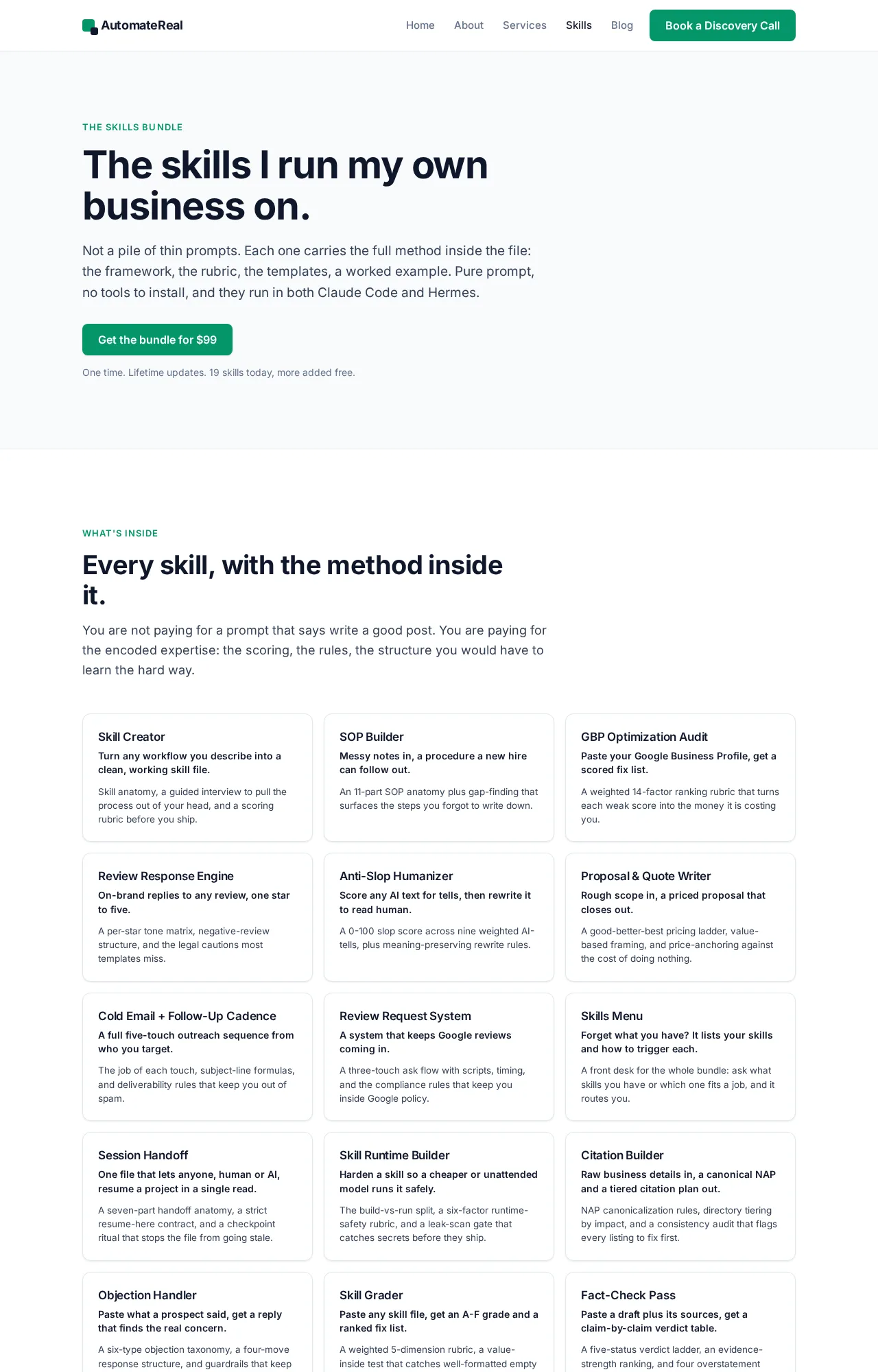
Two skills from the skills bundle sit on this layer. All of them cost $99 one time, and the Skill Runtime Builder hardens a skill so a cheaper or unattended model can run it safely.
The Skills Menu routes you to the right skill instead of loading the wrong ones by habit. If you want a ranked list of the skills that pay back their context, skills worth the tokens is that list. Cheap to try, and expensive to leave running.
 AutomateReal skills
Skills are free to install and priced in context once they run.
How do you keep Claude Code costs under control?
Keep the context small and the spend capped. Clear between tasks. Keep instructions in skills that load on demand. Send verbose jobs to subagents. Put a spend limit on anything you leave unattended.
The cost guidance lists the moves, and the cheap ones are habits:
- Run
/clearbetween unrelated tasks, and/renamefirst so you can/resumelater. - Keep
CLAUDE.mdthin and move long procedures into skills that load only when triggered. - Send bulk reading and long logs to subagents, so the main conversation stays small.
- Choose the model per task with
/model, and drop MCP servers you are not using. - Set a monthly spend limit before turning usage credits on, and a hard cap on any API key.
Watch /usage once a week. It separates the 3 or 4 habits that cost real money from the ones that only feel expensive.
Every dollar on the token meter is context you did not need.
For a managed version, see the skills bundle.
Related: claude skills marketplace
Related: claude subscription pricing
Related: Agent SDK: What It Is and When to Build vs Buy
FAQ
Does Claude Code cost anything on the free plan?
No. The free plan does not include Claude Code. The cheapest way in is Pro at $17 per month billed annually.
Can I use API credits instead of a subscription?
Yes. An API key or a Console account bills per token with no Claude plan needed. Set a spend cap first, because nothing else stops an unattended loop.
Does Claude Code charge per token on a Pro or Max plan?
Not inside your plan limits. Once usage credits are on, work past the limit bills at standard API rates, which is the only per-token charge on a subscription.
What happens when I hit my usage limit mid-task?
You can wait for the window to reset, move up a plan, or turn on usage credits. Recent builds can hold the interrupted task and continue it on their own after the reset.
Is Claude Code cheaper than GitHub Copilot or Cursor?
None of the three is cheaper in every case. Copilot and Cursor bill editor help, and Claude Code bills long agent sessions. Pick the one whose unit matches your day.
Do third-party skills from a marketplace cost extra?
No license fee, and no monthly charge for the skill itself. A marketplace skill is a file you drop into your skills folder. What it costs is context once it loads.
Getting the first workflow onto the meter
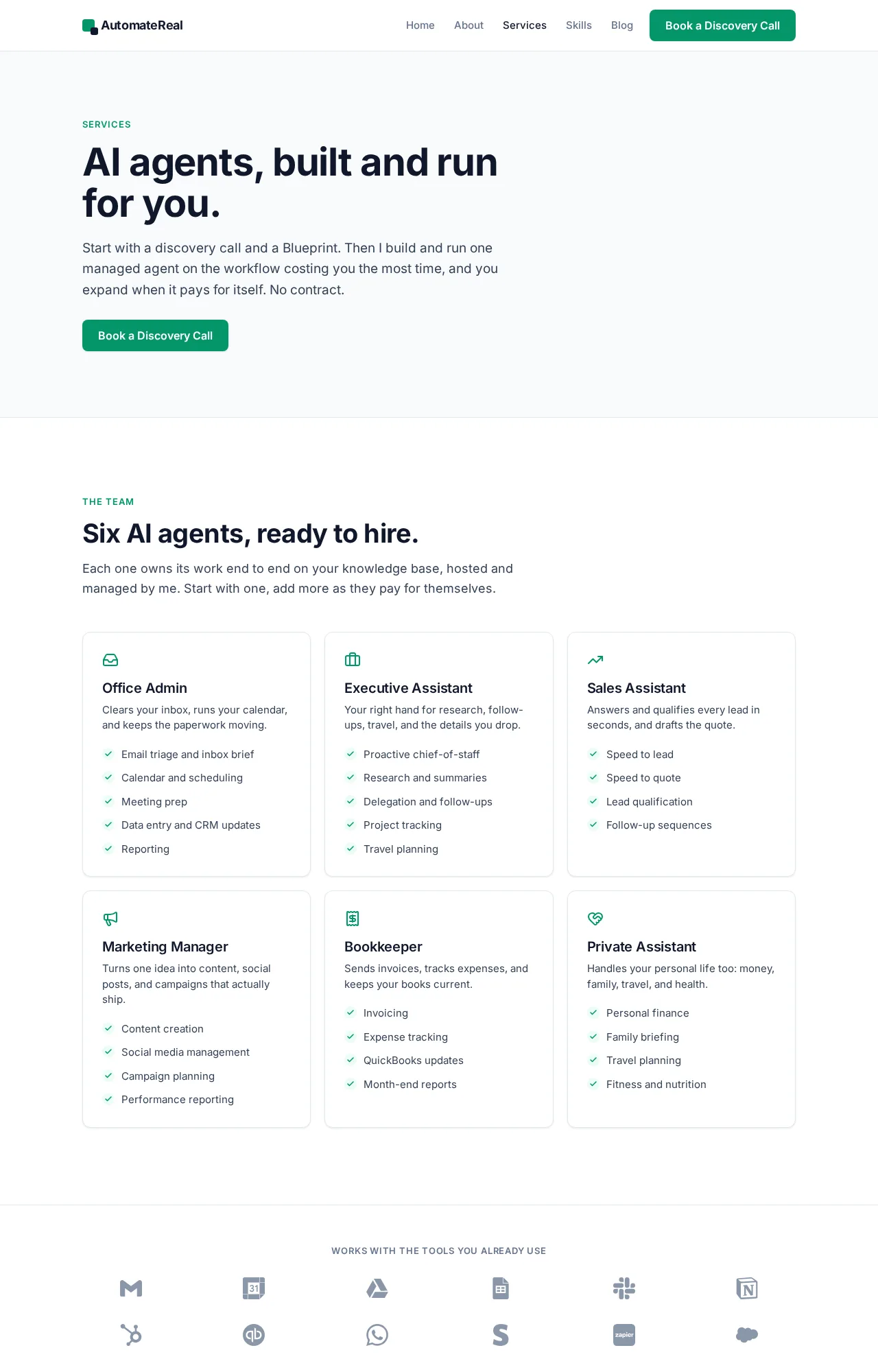
If you want help working out which workflow pays for its own tokens, a discovery call maps it in about 30 minutes. We rank the use cases, cost the one worth building first, and you keep the plan either way.
You can book that call here: https://automatereal.com/book
 AutomateReal services